在足式运动中, 如何鼓励安全的落脚点

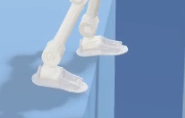
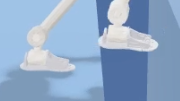
对于有脚掌的足式机器人来说,足端的落脚点对于机器人行走的安全性与稳定性至关重要。不安全的落脚点造成的稳定性隐患在实机上由于sim2real gap会被进一步放大,导致实机上无法稳定穿越复杂地形。下表给出了一个不安全/安全落脚点的对比。
| 不安全的落脚点 | 安全的落脚点 |
|---|---|
 |  |
为了鼓励策略学习安全的落脚点,已有的工作提出了多种方法。本文介绍几种典型思路及其原理。
Virtual Obstacles
Virtual Obstacle(虚拟障碍物)是Ziwen Zhuang提出的一种让足式机器人的落脚点远离不安全的地形边缘的方法。该方法的雏形在Robot Parkour Leanring 中被提出,最初是作为Soft Dynamics Constraints让策略不需创建实际的刚体就能快速学会对应的动作。
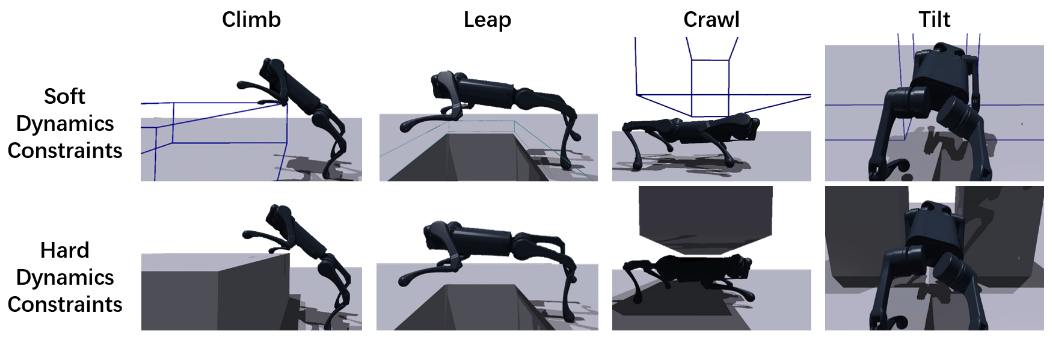
后来在Hiking in the Wild 中被改编为惩罚特定体积点穿透地形的虚拟障碍物,结合真实的刚体地形来让双足机器人学习安全的落脚点。早期Robot Parkour Learning中的虚拟障碍物是直接建模一整个虚拟物体,并惩罚机器人的mesh穿透这些虚拟物体。Hiking iin the wild中的虚拟障碍物是对地形进行边缘检测,在边缘处添加虚拟圆柱体,通过惩罚足端附着的体积点与圆柱体的穿透来鼓励安全的落脚点。

原理解析
Volume points penetration 不是直接检测刚体 contact,而是在机器人脚部(或指定 body)内部预先布置一组局部体积采样点:
- 每个 control step 把局部采样点变换到世界坐标;
- 对每个点检测它是否进入台阶边缘等虚拟障碍物;
- 计算点到障碍物表面的穿透深度;
- 对所有穿透点做求和/加权惩罚。
它解决的是普通 contact sensor 的两个问题:
- 脚底还没有发生真实碰撞时,无法提前惩罚“即将蹭到台阶边缘”;
- 单纯 point/contact penalty 很难表达“脚的某个体积区域已经进入障碍物”。
terrain / heightfield
        │
        ▼
virtual edge cylinders  ──────┐
                              │
robot body pose               │
        │                     ▼
        ▼             CylinderSpatialGrid
local volume points ──► world points
        │                     │
        ▼                     ▼
 point velocities      penetration_offset
        └──────────┬──────────┘
                   ▼
      volume-point penetration reward
1. 体积点 Volume Points
1.1 局部点阵
点阵由 Grid3dPointsGeneratorCfg 定义,在 body 局部坐标系中生成:
Grid3dPointsGeneratorCfg(
    x_min=-0.08,
    x_max=0.17,
    x_num=10,
    y_min=-0.05,
    y_max=0.05,
    y_num=4,
    z_min=-0.06,
    z_max=-0.03,
    z_num=2,
)
C2 VPP 的配置在每只 ankle_roll 上生成:
10 × 4 × 2 = 80 points/foot
2 feet     = 160 points/env
点阵被限制在足底附近的薄层,避免把整个腿部都当作体积点。
1.2 世界坐标变换
VolumePoints._refresh_volume_points() 读取 body 的 xpos / xquat,把局部点阵变换到世界坐标:
points_pos_w = math_utils.transform_points(
    self._volume_points_pattern.unsqueeze(0).expand(N_B, -1, -1),
    self._sensor_data.pos_w[env_ids].flatten(0, 1),
    self._sensor_data.quat_w[env_ids].flatten(0, 1),
).reshape(
    *self._sensor_data.pos_w[env_ids].shape[:2],
    self._sensor_data.point_num_each_body,
    3,
)
点速度由 body 的线速度和角速度共同计算:
points_vel_w = body_vel_w.unsqueeze(-2).expand_as(points_pos_w).clone()
points_vel_w += torch.linalg.cross(
    body_ang_vel_w.unsqueeze(-2),
    points_pos_w - body_pos_w.unsqueeze(-2),
    dim=-1,
)
即:
v_point = v_body + ω_body × (p_point - p_body)
这样脚转动时,即使 body 线速度为零,脚边缘的点也会有非零速度。
1.3 数据结构
VolumePointsData 的主要张量形状:
| 字段 | shape | 含义 |
|---|---|---|
pos_w | [N, B, 3] | body 世界位置 |
quat_w | [N, B, 4] | body 世界姿态,wxyz |
vel_w | [N, B, 3] | body 世界线速度 |
ang_vel_w | [N, B, 3] | body 世界角速度 |
points_pos_w | [N, B, P, 3] | 每个体积点的世界位置 |
points_vel_w | [N, B, P, 3] | 每个体积点的世界速度 |
penetration_offset | [N, B, P, 3] | 穿透偏移向量 |
其中:
N:环境数B:挂载 volume points 的 body 数P:每个 body 的点数
2. 虚拟障碍物与穿透计算
2.1 地形边缘圆柱
从地形高度场/mesh 中检测尖锐边缘,并生成虚拟圆柱:
edge_obstacle_cfg = GreedyconcatEdgeCylinderCfg(
    cylinder_radius=0.04,
    min_points=2,
    component_workers=0,
    merge_collinear_gap=0.09,
    merge_collinear_angle_threshold=30.0,
    merge_collinear_line_distance=0.04,
)
地形配置:
cfg.scene.terrain.virtual_obstacles = {"edges": edge_obstacle_cfg}
cfg.scene.terrain.virtual_obstacle_use_heightfield = True
cfg.scene.terrain.virtual_obstacle_raycast_resolution = 0.05
cfg.scene.terrain.virtual_obstacle_raycast_backend = "gpu"
cfg.scene.terrain.virtual_obstacle_raycast_riser_threshold = 0.04
这些圆柱是虚拟障碍物:
- 不参与物理碰撞;
- 不产生真实接触力;
- 只用于计算 volume points 的穿透深度和奖励。
虚拟障碍物的边缘检测使用了地形的trimesh,如果使用mjlab内置的trimesh地形的话,由于其是使用box组合而成的trimesh,在平地上会有一些拼接导致的额外边界。所以在检测边缘时会有一些错误的边缘被检测出来,这时候可以将trimesh先转换为heightfield,然后再检测边缘。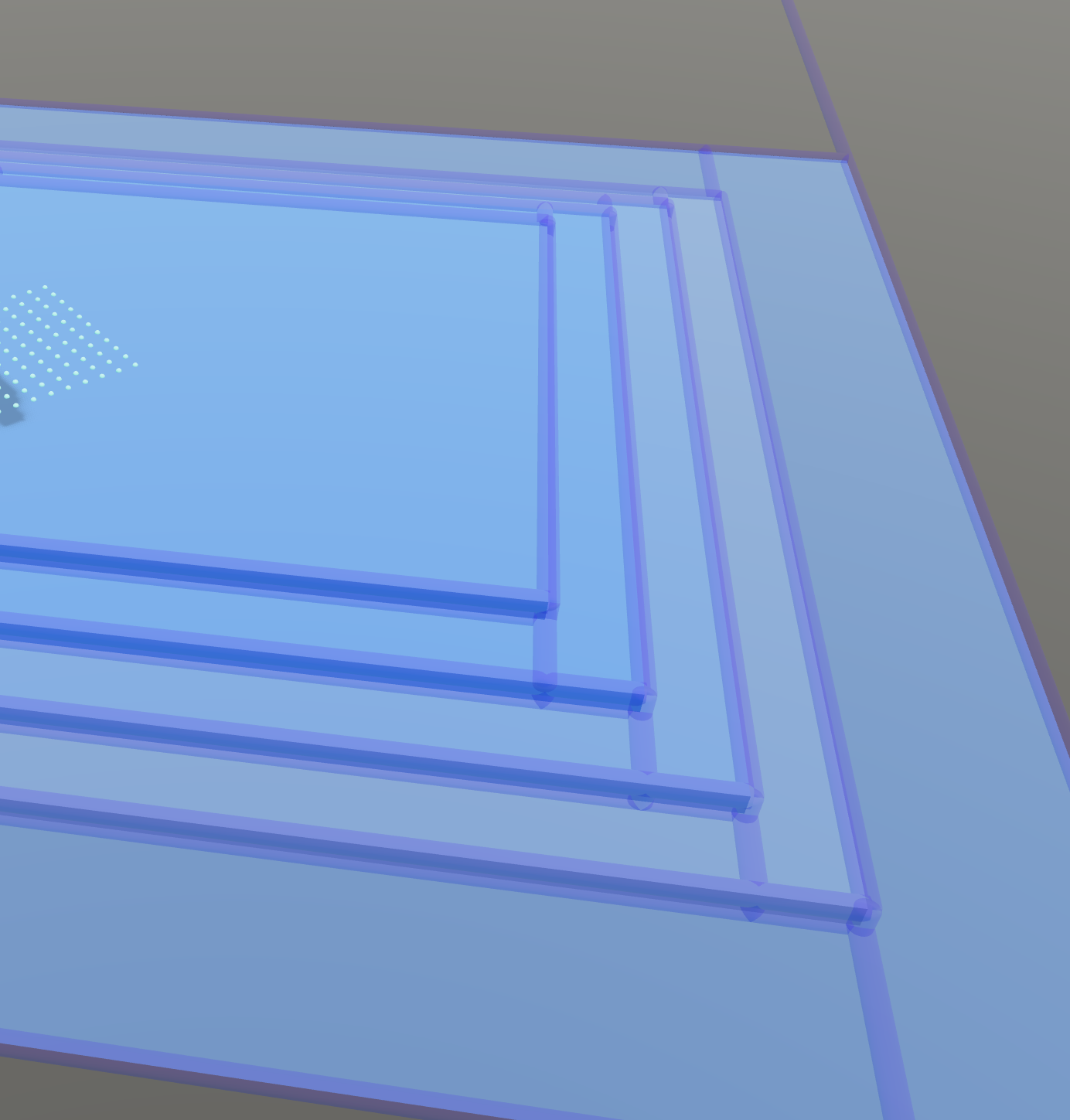
2.2 注册到 sensor
通过 startup event 把地形虚拟障碍物注册到 sensor:
cfg.events["register_virtual_obstacles"] = EventTermCfg(
    func=envs_mdp.register_virtual_obstacle_to_sensor,
    mode="startup",
    params={"sensor_cfgs": SceneEntityCfg("leg_volume_points")},
)
VolumePoints.register_virtual_obstacles() 保存 terrain.virtual_obstacles 字典。
2.3 每个点的穿透偏移
VolumePoints._refresh_penetration_offset() 对所有虚拟障碍物查询穿透偏移,并保留穿透深度最大的圆柱:
penetration_offset_buf[:] = 0.0
penetration_depth_buf = torch.zeros_like(penetration_offset_buf[..., 0])

for virtual_obstacle in self._virtual_obstacles.values():
    penetration_offset = virtual_obstacle.get_points_penetration_offset(
        self._sensor_data.points_pos_w[env_ids].flatten(0, 2)
    )
    penetration_offset = penetration_offset.reshape(
        self._sensor_data.points_pos_w[env_ids].shape
    )
    penetration_depth = torch.norm(penetration_offset, dim=-1)
    mask = penetration_depth > penetration_depth_buf
    penetration_depth_buf[mask] = penetration_depth[mask]
    penetration_offset_buf[mask] = penetration_offset[mask]
2.4 圆柱穿透 kernel
CylinderSpatialGrid 先用 3D spatial grid 找到附近圆柱,再在 Warp kernel 中计算:
ab = b - a
ab_len = wp.length(ab)
ab_dir = ab / ab_len
ap = p - a
t = wp.dot(ap, ab_dir)

if t < 0.0 or t > ab_len:
    continue

proj = a + t * ab_dir
dist = wp.length(p - proj)

if dist < r:
    d = r - dist
    if d > depth:
        depth = d
        offset_ = (proj - p) * (d / dist)
含义:
- 点先投影到圆柱轴线段;
- 如果点超出圆柱端面,直接跳过;
dist是点到轴线的距离;r - dist是穿透深度;penetration_offset的长度就是穿透深度,方向从圆柱表面指向点。
奖励计算
代码:
def volume_points_penetration_velocity(
    env,
    sensor_name: str,
    tolerance: float = 0.0,
):
    volume_sensor: VolumePoints = env.scene[sensor_name]
    penetration = volume_sensor.data.penetration_offset.flatten(1, 2)
    penetration_depth = torch.norm(penetration, dim=-1)
    in_obstacle = (penetration_depth > tolerance).float()
    points_vel = volume_sensor.data.points_vel_w.flatten(1, 2)
    points_vel_norm = torch.norm(points_vel, dim=-1)
    velocity_times_penetration = (
        in_obstacle * (points_vel_norm + 1e-6) * penetration_depth
    )
    return torch.sum(velocity_times_penetration, dim=-1)
数学形式:
d_i = ||penetration_offset_i||
m_i = 1[d_i > tolerance]
R_vel = Σ_i m_i * (||v_point_i|| + ε) * d_i
特点:
- 静止但穿透的点:有惩罚;
- 正在运动且穿透的点:惩罚更大;
- 鼓励机器人主动远离障碍物,而不是维持穿透状态。
优缺点
优点:
- 在接触前就有奖励引导运动。
缺点:
- 用这个奖励在人形机器人上学习上台阶,容易学出来往前顶脚的行为。脚掌前方容易顶到台阶立面。
Foot Gradient Penalty
这个方法利用足端附着的RayCastSensor来测量脚底的地面相对于脚底的高度,并惩罚脚底地面高度过低或梯度过大。
这类方法在Light-Loco-Parkour和SOLO 中都有用到。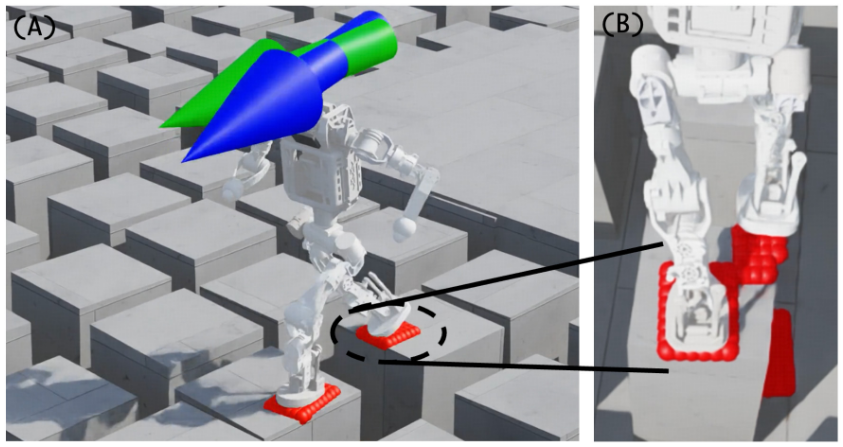
优缺点
优点:
- 奖励构建起来简单
缺点:
- 只在接触时有奖励,在腾空相没有奖励。奖励比较稀疏。
Imagined Foothold
这个思路在SSR 中被提出,主要思路是将只在接触时才有奖励的Foot Gradient Penalty变为接触和腾空时都有奖励。
而这则是通过预测未来落脚点来实现的。在SSR中,框架会训练一个foothold imagination model,预测未来的落脚点$\mathbf{p}$,对于支撑相的足端,会鼓励其足端heightscan的高度接近足端高度;而对于摆动相的足端,则会鼓励其未来落脚点的heightscan的高度接近足端高度,这样就实现了在支撑相和摆动相都有奖励来引导落脚。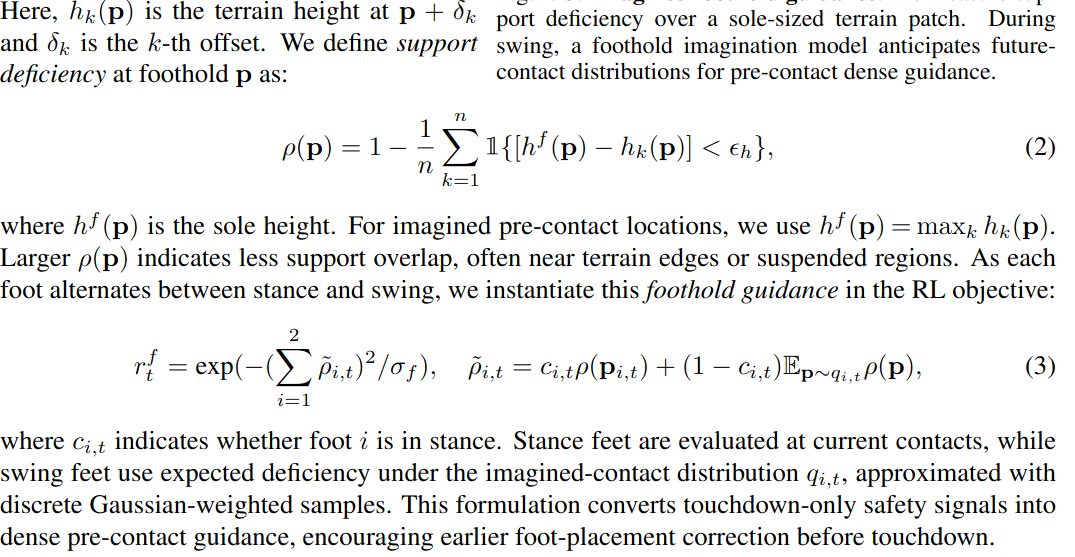
优缺点
优点:
- 奖励密集,可能有助于加速学习
缺点:
- 落脚点的监督目标文中没有详细解释,可能需要根据某种规则来构建,训练会更加复杂
